Mind-Muscle Connection: Focusing Attention During Training
By Mr. Black · Sources (2)
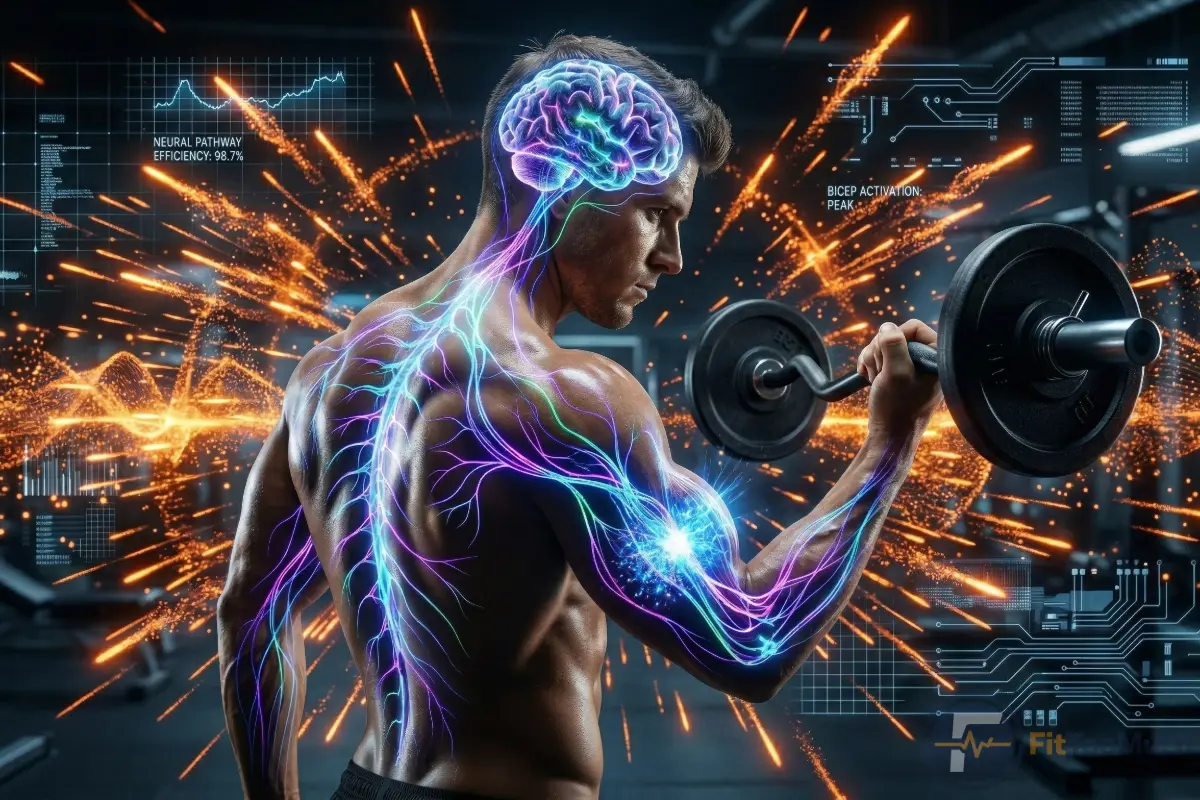
Feeling your arms during chest work or sore biceps after back training does not prove a missing mind-muscle connection. Multi-joint movements involve several muscles, and soreness is not an accurate activation meter. Focusing on a target muscle is one possible cue; exercise technique, load and the purpose of the task also matter.
1. What is Mind-Muscle Connection?
MMC is the ability to consciously and deliberately contract a specific muscle or group of muscles during an exercise, rather than simply moving a weight from point A to point B using momentum.
2. Why Does It Matter?
- Increased Muscle Engagement: Research shows that internal focus significantly increases electromyographic (EMG) activity in the target muscle.
- Injury Prevention: Better control means less reliance on joint-stressing momentum and "ego lifting."
- Balanced Physique: Ensures that lagging body parts actually do the work they are supposed to.
3. How to Master the Connection
- Light Weight Warm-ups: Start with very light weights to feel the muscle "wake up" before going heavy.
- Squeeze at the Peak: Pause for a second at the top of the movement and squeeze the muscle hard.
- Slow Down the Negative: Controlling the eccentric phase (lowering the weight) keeps the target muscle under constant tension.
- The "Touch" Technique: If possible, have a partner touch the muscle being worked to provide tactile feedback to your brain.
Summary
Lifting heavy is great for strength, but lifting with "intent" is what builds a great physique. Once you master the Mind-Muscle Connection, you'll find that you can get more out of every single rep, leading to better results with less joint wear and tear.
Use our Workout Timer to keep your focus sharp and stay disciplined between sets!
A higher EMG signal in an experiment does not by itself guarantee more growth or injury prevention. Attention studies have limits in size and duration. Try a simple cue during a familiar lift and judge whether it improves execution. Do not chase a squeezing sensation at the expense of a controlled movement path.
Sources and further reading

Mr. Black
A software developer passionate about health and fitness. Created FitTooMuch with the intention of transforming standard scientific formulas into easy-to-use, accurate, and free tools to help everyone with their basic health planning.