Five Foods and Health Claims: Labels and Portion Choices
By Mr. Black · Sources (2)
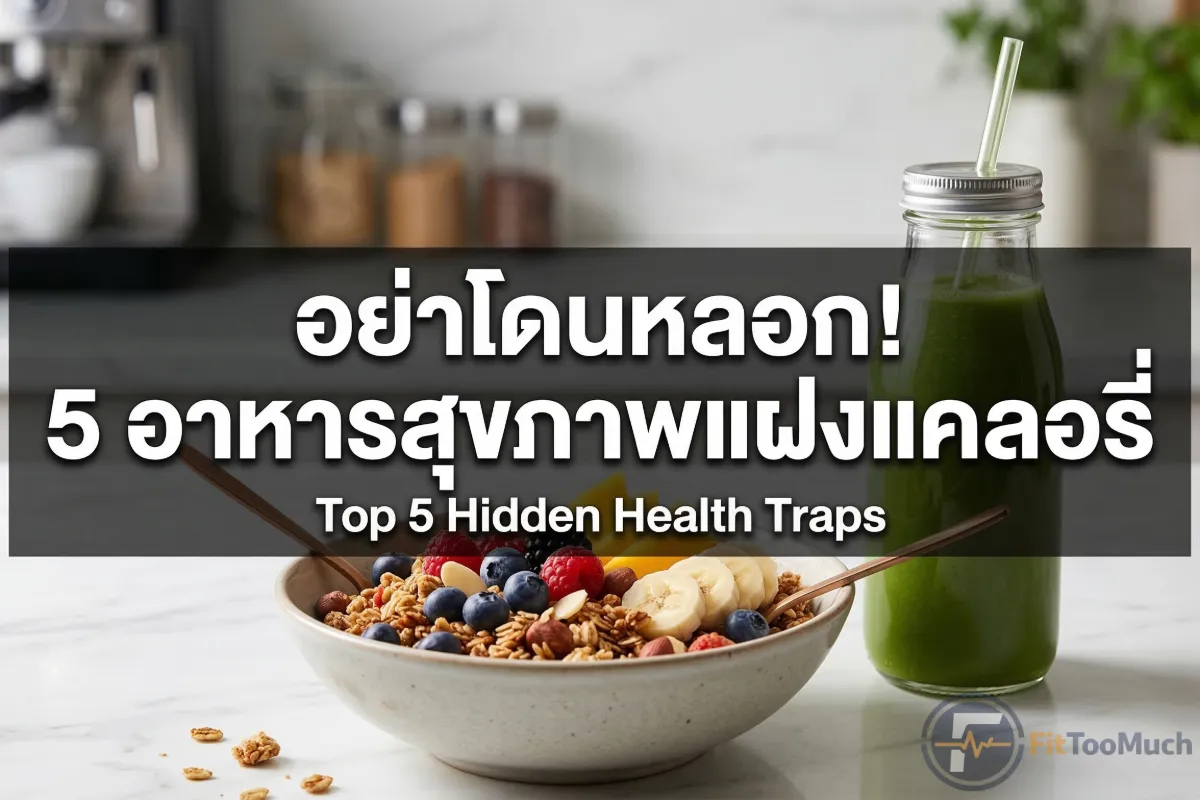
Have you ever felt like you're doing everything right—choosing the "healthy" options, hitting the gym, and avoiding junk food—yet the results on the scale and in the mirror are non-existent? You might be a victim of the "Health Halo Effect." This psychological phenomenon makes us perceive a food as overall healthy based on a single claim like "organic," "low fat," or "natural," leading us to ignore the massive amount of hidden calories and sugar.
These five examples are not forbidden foods and do not switch metabolism off. They illustrate why front-label claims do not replace nutrition information. Check portions, ingredients and what a product replaces in your meal rather than judging it by a single health claim.
1. Granola: Sugar-Coated Energy Bombs
Granola is the ultimate marketing success story. While it contains oats and nuts, most commercial granolas are held together by large amounts of honey, maple syrup, and vegetable oils to create that signature crunch.
Read the label: granola is often energy-dense, but a small bowl is not a standard serving. Compare the amount you eat with the label’s portion and check added sugar where listed. It does not instantly halt fat loss through insulin. Oats and nuts also contain energy; portion size and satisfaction matter alongside ingredients.
2. Fruit Juices and Smoothies (The Fiber Gap)
Strained juice generally has less fibre than whole fruit, whereas a smoothie blending the edible pulp can retain fibre. Distinguish the two and consider ingredients such as syrup, milk or nut butter. Fruit-based drinks are not all nutritionally identical.
Context matters: fructose does not automatically become belly fat whenever someone drinks juice. Amount and overall intake matter. Drinks may satisfy differently from chewing whole fruit, so compare portions and your own fullness. If you enjoy smoothies, choose ingredients and a serving that fits your meal rather than avoiding fruit altogether.
3. Flavored Low-Fat Yogurts
Low-fat yogurt does not always contain high added sugar, and low fat is not inherently a drawback. Some products contain added sugar and others do not. Read the specific label rather than assuming all products in the category are the same.
Compare fairly: check protein, sugars and serving size; total sugar can include naturally occurring lactose. Plain yogurt with fruit is one option, but flavoured yogurt can also fit a diet. One cup does not establish chronically high insulin or make stored fat inaccessible.
4. Creamy "Healthy" Salad Dressings
Dressings add flavour and energy according to their recipe. Seed oils should not be categorically labelled inflammatory. Check the specific ingredients and amount used. A dressing you enjoy in a suitable portion can help make vegetables a repeatable part of your meals.
A portion example: if the label gives energy per 15 g and you use 30 g, double the listed amount. Two tablespoons are not universally 200 kcal. Measuring once can help later estimates. Assess the whole meal rather than classifying it by the presence of fat alone.
5. Commercially Prepared Protein Shakes
The "Grab-and-Go" protein shakes found in convenience stores often prioritize taste over nutrition, adding maltodextrin and syrups to improve texture.
The Science: While they provide protein, the added carbohydrates and fats often lead to an unnecessary caloric surplus, defeating the purpose of a "lean" meal replacement.
| Food Category | The Trap | The Better Choice |
|---|---|---|
| Breakfast | Commercial Granola | Plain Rolled Oats + Raw Nuts |
| Beverages | Fruit Juice (No Fiber) | Whole Fresh Fruit |
| Snacks | Flavored Low-Fat Yogurt | Plain Greek Yogurt + Berries |
Summary
To see real progress, focus on **Whole Foods**. The more processed a food is, the more opportunities there are for hidden calories to slip in. Use our Macro Calculator to ensure you're getting the right nutrients and track your total burn with the BMR & TDEE Tool.
Sources and further reading

Mr. Black
A software developer passionate about health and fitness. Created FitTooMuch with the intention of transforming standard scientific formulas into easy-to-use, accurate, and free tools to help everyone with their basic health planning.